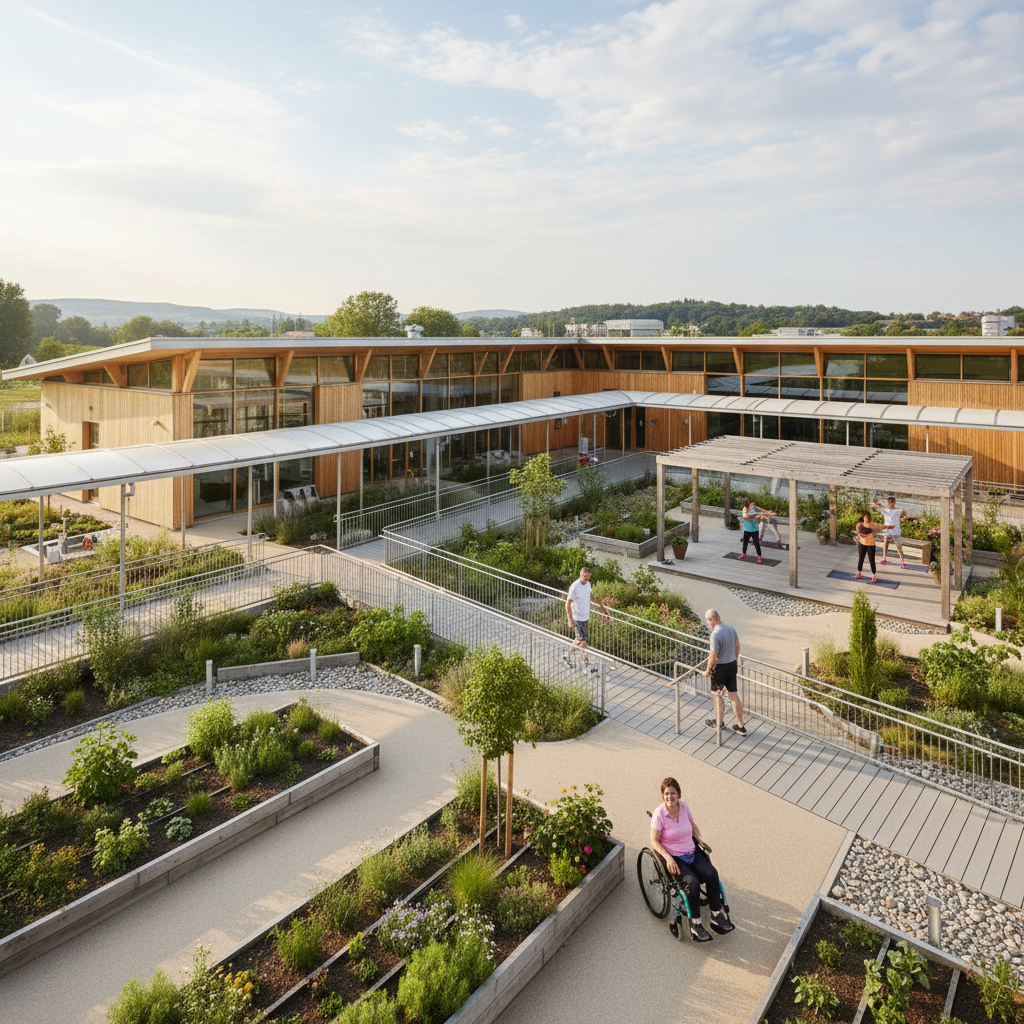


Patient hands gripping parallel bars during rehabilitation, therapist's steadying hand visible beneath elbow, natural window light illuminating the grip

CARF Accredited

Spinal Cord Injury Specialty

Spinal Cord Injury Rehabilitation

Your injury
is not your
outcome.

Ascend specializes exclusively in cervical, thoracic, and lumbar spinal cord injuries — from acute stabilization through lifelong community reintegration.

Whether you arrived here from a trauma unit, a family member's search, or a case manager's referral — you are in the right place.

No phone number required. No pressure. Just information.

// Transparent Process

What happens,
week by week.

Nothing is vague. Nothing is oversold. This is what your first twelve weeks at Ascend actually look like.

Medical professional reviewing assessment charts with patient in a bright rehabilitation room, natural light from window
Days 1–5
Phase 1 — Intake & Assessment

Week one is evaluation, not exercise.

We measure what your body can do today so we never guess tomorrow.

Your clinical team — physiatrist, physical therapist, occupational therapist, and SCI nurse — conducts a full ASIA impairment classification within 48 hours of admission. We chart sensation, motor function, and bowel-bladder status before a single therapy minute is scheduled. Families receive a written summary in plain language.

Ask about this phase

94%

patient satisfaction score

Press Ganey 2025

Therapist and patient sitting across a table reviewing a rehabilitation plan document together in a calm office setting
Days 6–10
Phase 2 — Goal-Setting

Your goals, written in your words.

We ask what matters to you — not what the textbook says should matter.

A structured goal-setting conference brings you, your family, and your full care team to the same table. We use the COPM framework — Canadian Occupational Performance Measure — to anchor therapy to real life. Returning to work, driving again, playing with your children: these are clinical targets, not wishful thinking.

Ask about this phase
+2.4

avg. FIM motor gain per week

Cervical & thoracic cohort

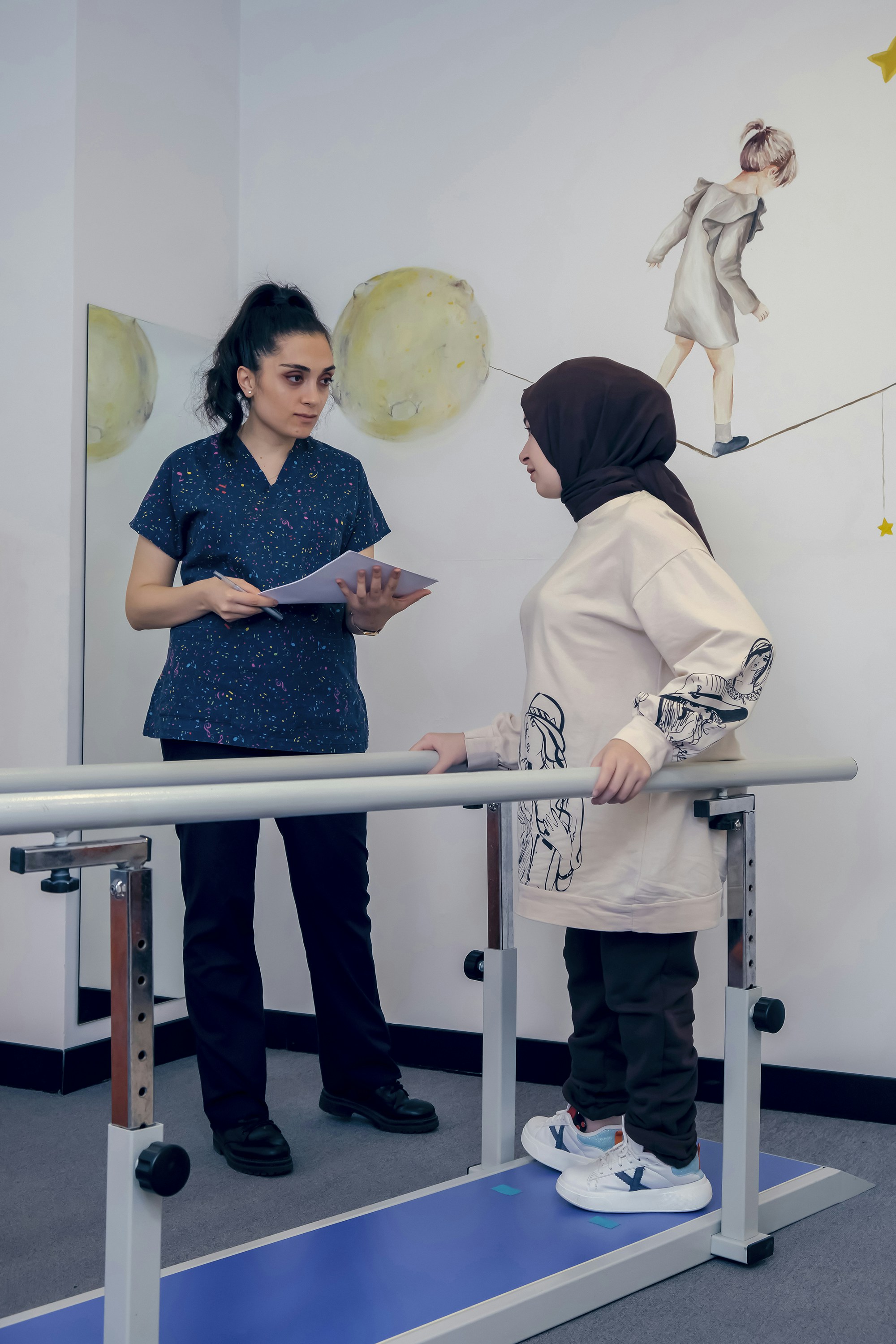
Physical therapist assisting patient with parallel bars walking exercise, hands supporting patient at waist level, bright therapy gym
Weeks 2–8
Phase 3 — Intensive Therapy

Three hours of therapy, five days a week.

Recovery is physical work. We do not pad the schedule with passive treatments.

Combined PT and OT sessions focus on functional mobility, transfer training, upper extremity strengthening, and locomotor training on the Lokomat treadmill system. Aquatic therapy in our heated 92° hydrotherapy pool begins in week three for qualifying patients. Progress is documented with validated outcome measures every two weeks.

Ask about this phase
18 yrs

serving SCI patients

Est. 2007, Chicago, IL

Patient in wheelchair navigating kitchen counter independently during adaptive living skills practice session
Weeks 6–10
Phase 4 — Adaptive Skills Training

Life outside this building starts here.

We simulate the world you are returning to — not a sanitized version of it.

Our adaptive daily living apartment replicates a real home: kitchen, bathroom, bedroom, exterior ramp. Patients practice cooking, dressing, and emergency transfers in a space that is forgiving enough to fail in safely. Community reintegration outings — grocery stores, restaurants, public transit — begin in week eight for appropriate patients.

Ask about this phase
94%

patient satisfaction score

Press Ganey 2025

Patient in wheelchair leaving rehabilitation facility through front doors with family member alongside, sunlight streaming in
Weeks 8–12
Phase 5 — Discharge Planning

Discharge is not the end. It is the handoff.

We begin planning for home before you feel ready to leave.

Our discharge coordinator contacts your home health agency, DME supplier, and outpatient therapy team no later than week six. A home assessment visit by an OT identifies modifications needed before you arrive. Insurance authorization for continued services is managed by our team, not yours.

Ask about this phase
+2.4

avg. FIM motor gain per week

Cervical & thoracic cohort

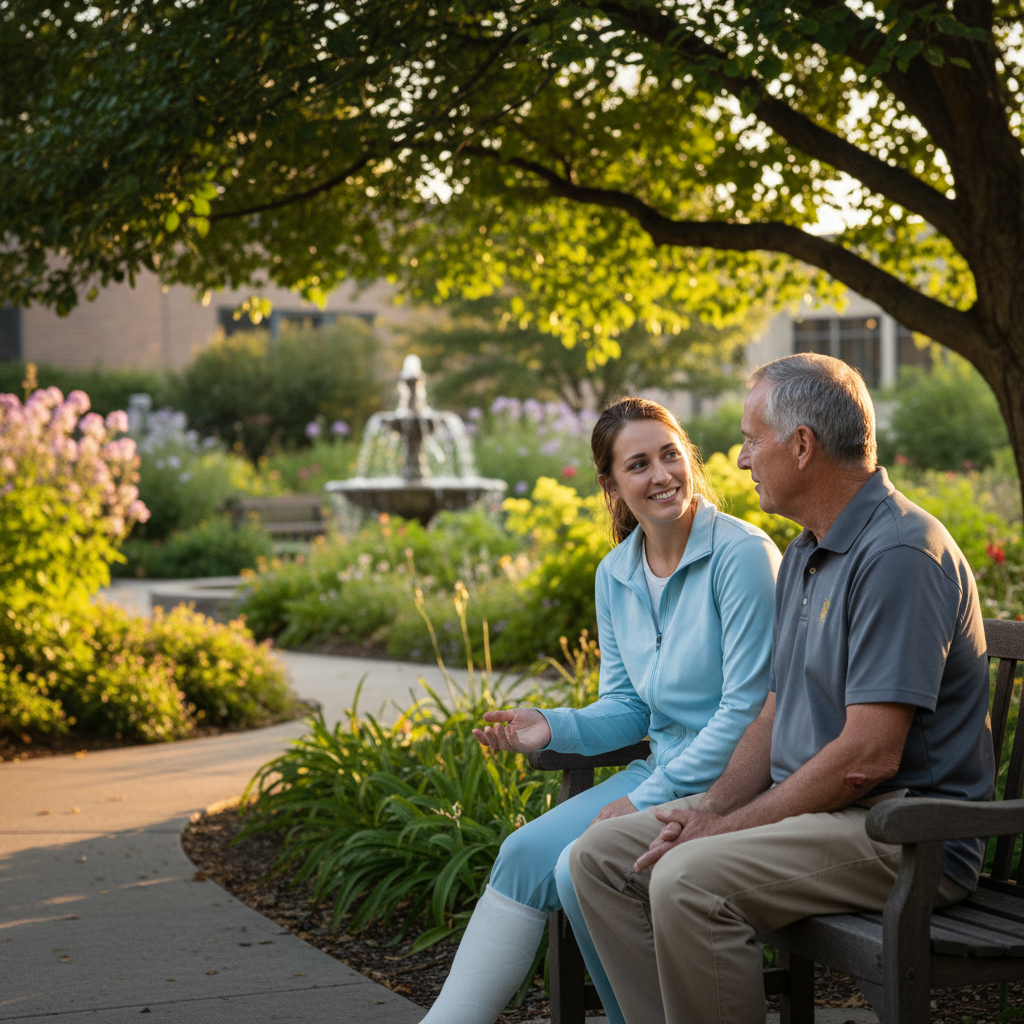
Patient and peer mentor sitting together outdoors at rehabilitation center, warm afternoon light, engaged in conversation
Ongoing
Phase 6 — Lifelong Follow-Up

Your chart does not close at discharge.

We see our patients at 30 days, 6 months, and every year thereafter.

Our SCI follow-up clinic runs every Tuesday and Thursday. Annual wellness evaluations track secondary conditions — pressure injuries, autonomic dysreflexia, pain, and spasticity — before they become crises. Peer mentor matching connects newly injured patients with program graduates who have navigated the same diagnosis.

Ask about this phase
// Patient & Family Voices

The words we didn't write
for ourselves.

“I arrived at Ascend eleven days after a C5 incomplete injury. I left eight weeks later pushing my own manual chair and cooking my own breakfast. The team never once told me what I couldn't do.”

Marcus J.

Patient — C5 Incomplete, 2024

“As a case manager at a Level I trauma center, I refer to Ascend because they answer my clinical questions directly and return calls the same day. Their intake coordinator speaks my language.”

Dr. Priya Nair

SCI Case Manager, Northwestern Memorial

“I was the one Googling at 2 a.m. after my husband's accident. The Family Guide they sent me was the first thing that made me feel like someone had been through this before and survived.”

Deborah M.

Family Member — Thoracic Injury

“I arrived at Ascend eleven days after a C5 incomplete injury. I left eight weeks later pushing my own manual chair and cooking my own breakfast. The team never once told me what I couldn't do.”

Marcus J.

Patient — C5 Incomplete, 2024

“As a case manager at a Level I trauma center, I refer to Ascend because they answer my clinical questions directly and return calls the same day. Their intake coordinator speaks my language.”

Dr. Priya Nair

SCI Case Manager, Northwestern Memorial

“I was the one Googling at 2 a.m. after my husband's accident. The Family Guide they sent me was the first thing that made me feel like someone had been through this before and survived.”

Deborah M.

Family Member — Thoracic Injury

// Free Clinical Resource

The Family Guide to
the First 90 Days.

We wrote this guide because the questions families ask at 2 a.m. deserve real answers. Forty-two pages of clinical knowledge, in plain language. No upsell inside.

What to expect in the first 90 days

A week-by-week calendar of therapies, assessments, and family milestones.

18 questions to ask your insurance

Exact language for authorization calls — what to say, what to document.

Home preparation checklist

Room-by-room modifications before discharge day, with cost estimates.

Caregiver self-care protocol

Evidence-based guidance for the person beside the patient.

Downloaded by 4,200+ families since 2020. No phone number required.

Send me the guide.

Three fields. Delivered to your inbox in under two minutes.

No phone number. No sales calls. Unsubscribe anytime.
Your information is never shared or sold.

Ready to speak with someone now?

Schedule a callback — no cold call→